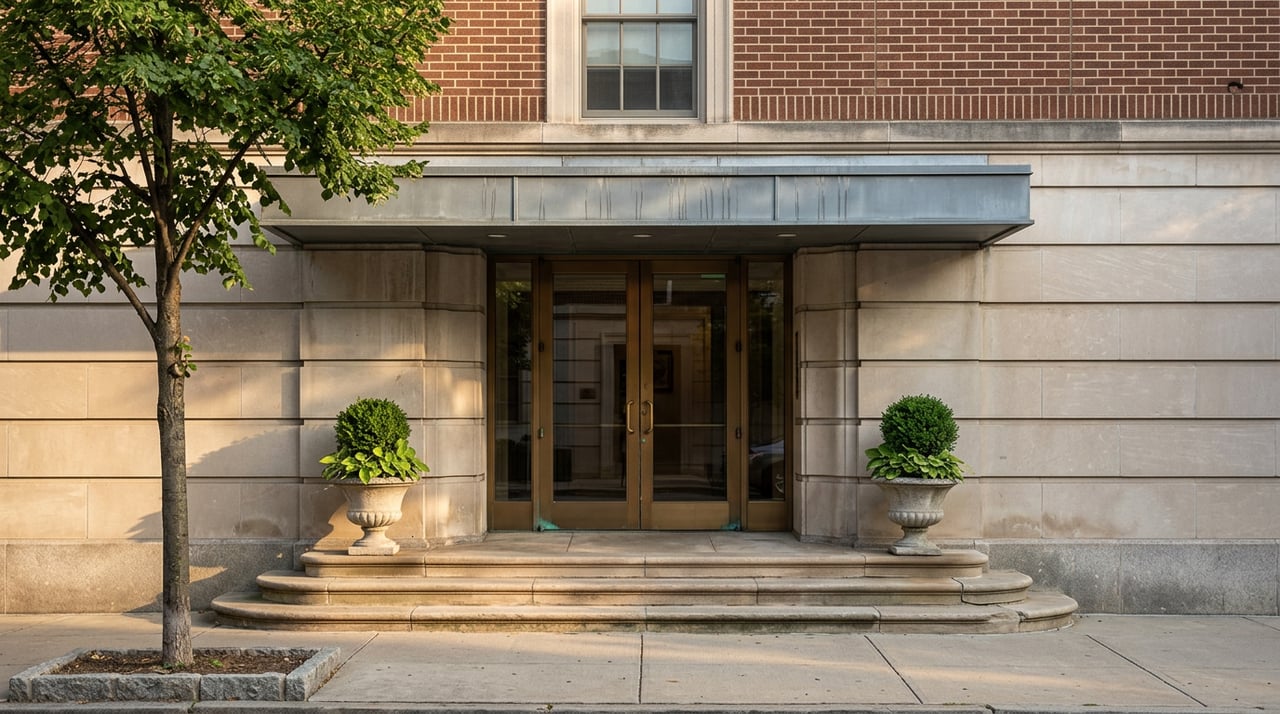
The Number That Matters More Than the List Price on a Gold Coast Condo
August 20, 2026
August 20, 2026
Picture two one-bedroom condos a few blocks apart, both listed right around $585,000, the median list price for Gold Coast condos as of early August 2026. One carries a modest monthly assessment. The other's runs well over $1,000. Most buyers walk toward the cheaper number and call it a win.
That comparison leaves out an important part of a building's cost of ownership: its financial condition.
Chicago's Facade Ordinance has been on the books since 1996, and it applies to every building 80 feet or taller, which in a neighborhood built mostly between the 1890s and the 1970s means nearly every high-rise from Astor Street to Sheridan Road. Under the Chicago Municipal Code, owners must submit written condition assessments of the exterior envelope, and depending on the building's construction category, a full critical examination is due on a cycle running anywhere from 4 to 12 years. The city's Exterior Wall Program requires the inspecting architect or engineer to classify the facade as Safe, Safe with a Repair and Maintenance Program, or Unsafe and Imminently Hazardous.
Buyers should ask for that classification as part of their review. A low monthly assessment alone does not show whether a critical examination will identify masonry repairs that need attention. The ordinance does not create the deferred maintenance in a prewar Gold Coast building. It just puts a legal clock on when that maintenance has to surface, whether the board has saved for it or not.
One important consideration is how the law treats special assessments. Under Section 18(a)(8) of the Illinois Condominium Property Act, a board can adopt a special assessment without a unit owner vote as long as the total of that assessment plus the year's regular assessments does not exceed 115% of the prior year's total assessments. That threshold, explained by property managers who work under it every day, is a real ceiling, and it means a board can raise a meaningful sum of money without a building-wide vote.
What that ceiling also means is that anything bigger, a full facade rebuild, a ground-up elevator modernization, has to clear a much higher bar. It needs owner buy-in, which means meetings and debate. Buyers may need to review association records for details about a building's financial condition.
Gold Coast housing stock splits into a few distinct economic categories, and the sticker price tells you almost nothing about which one you are buying into.
| Building type | What draws buyers in | Potential maintenance considerations |
|---|---|---|
| Prewar co-ops (Astor Street, Dearborn Parkway) | Entry pricing as low as $250,000 for a one-bedroom | Century-old masonry, plus landmark district review that limits repair methods and adds cost |
| Prewar condo high-rises (Sheridan Road corridor) | Doorman service, courtyard charm, full ownership | Original curtain wall and window systems now due for resealing or replacement |
| Newer or rebuilt towers | Stronger reserve funding, more predictable dues | Fewer immediate triggers, but elevator and mechanical systems still hit their cycle eventually |
The co-op discount is real, but it comes with financing capped at roughly 50 to 70% of purchase price. And across the neighborhood's older stock, elevator systems that typically need a full modernization every 25 to 30 years are arriving at that milestone in clusters, because so much of Gold Coast was built or converted in the same few decades.
None of that shows up in a per-square-foot comparison. It shows up in a reserve study, if the buyer thinks to ask for one.
Every Gold Coast buyer comparing two listings at the same price can consider the same question: how much of a building's future cost of ownership is already reflected in its price?
Before writing an offer on a Gold Coast condo, ask the listing agent for these, in this order:
None of these documents will show up in a standard online search filter, and that is exactly why they matter. The listing price is one part of the cost. These four documents can help buyers understand a building's potential future costs.
Is an HOA special assessment the same as the special assessment on my property tax bill? No. An HOA special assessment is levied by your condo association to cover a building expense, like a facade repair or elevator modernization, and it is separate from any municipal or Cook County special assessment that might appear on your tax bill for public infrastructure work.
Can I ask the seller to cover a pending special assessment? Yes, and it is a common point of negotiation. Whether the buyer or seller is responsible for an assessment adopted before or after closing usually depends on the contract language, so this is worth flagging for your attorney during the Illinois attorney review period.
Does a low monthly assessment always mean a problem building? Not always, but it deserves a follow-up question, not relief. A genuinely well-funded building can have modest dues because its reserve contributions were set correctly from the start. The way to tell the difference is the reserve study, not the dues line by itself.
Comparing two Gold Coast condos on price alone leaves out a building's condition, reserve planning, and inspection schedule. Kris Maranda's team pulls reserve studies and facade filing histories as part of every Gold Coast buyer consultation, to help buyers understand potential ownership costs beyond the listing price.
Ready to see what a specific Gold Coast building's financials actually say before you write an offer? Reach out to Kris Maranda or request a Free Home Valuation if you're weighing whether to sell into this market first.
This article is general information, not legal, tax or financial advice. Consult a qualified professional about your situation.
Stay up to date on the latest real estate trends.
If you are in pursuit of real estate agents whose dedication and drive are unparalleled, and who commit to serving your interests with the utmost efficiency and effectiveness, then your search concludes here.
130 W PARK AVE ELMHURST IL 60126 ALBANIA OFFICE MARANDA REAL ESTATE GROUP BLVD GJERGJ FISHTA 7 PALL SHALLVARE TIRANE ALBANIA